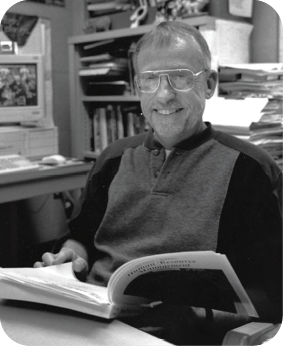
David A. Whitsett
Running the Distance: Helping Panthers Find Strength in Every Step
When psychology professor David A. Whitsett arrived at the University of Northern Iowa in the mid-1970s, he didn’t just bring research expertise, he brought curiosity about what drives people to reach beyond their limits. Two decades later, that curiosity became the heartbeat of one of UNI’s most memorable and nationally recognized learning experiences: the Marathon Class.
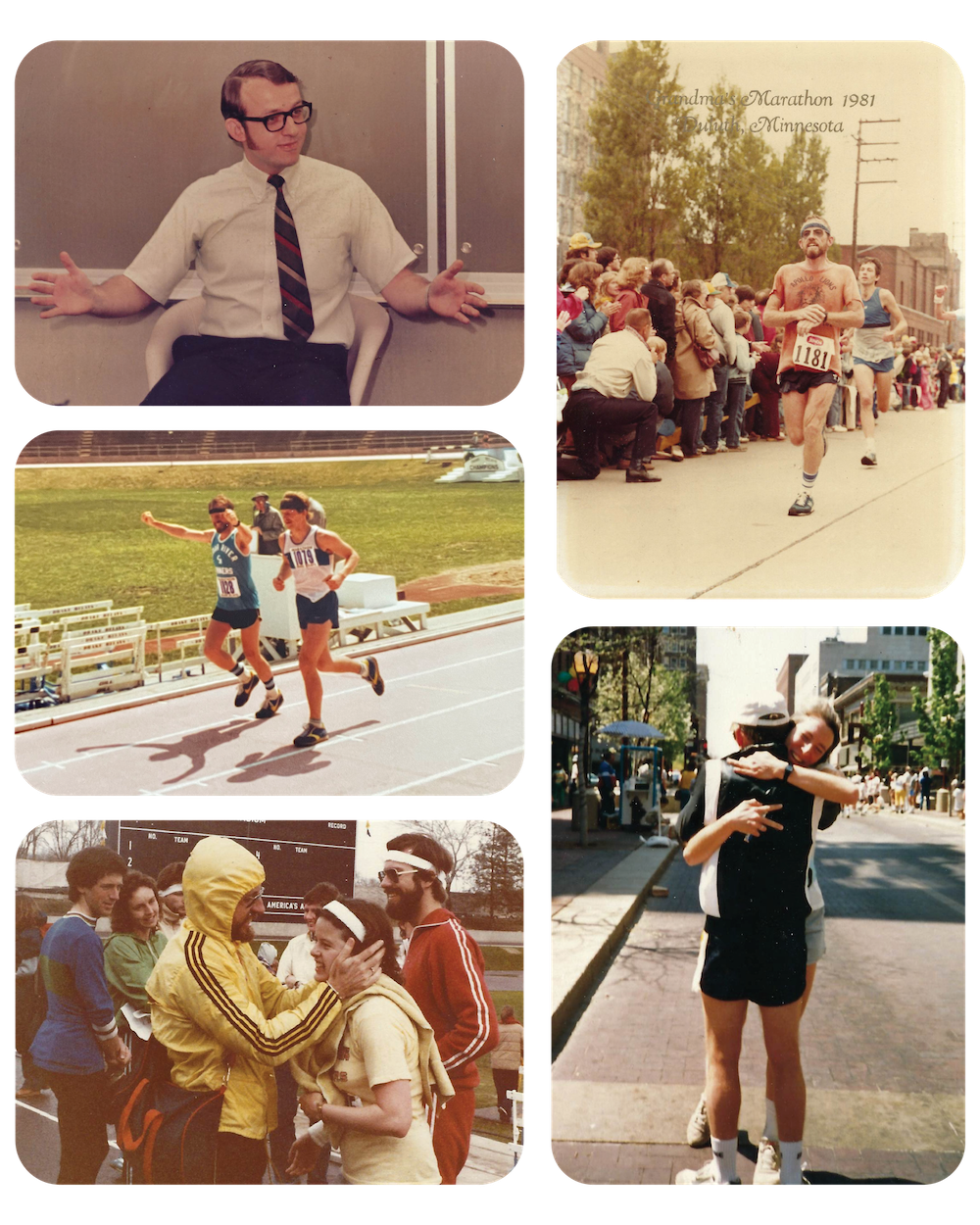 Created with exercise physiologist Forrest Dolgener, the course asked an audacious question: “What if students who had never run much in their lives trained, body and mind, to finish a 26.2-mile marathon?” The answer, as Whitsett later told Northern Iowa Today in 1993, was simple: “They believe if they can do 26 miles, they can do anything. Their attitude becomes, ‘Bring on the world.’”
An experiment in mind and body
The two professors met at the intersection of psychology and physiology. Whitsett brought deep understanding of human motivation and self-efficacy; Dolgener contributed rigorous training science and a hands-on approach that earned him a loyal following among students.
We wanted to know, if you take a group of unconditioned people who’ve never done much athletically and put them through a program which you know produces a high level of physical development, do they become more mentally developed? The answer was an unequivocal yes.”
Whitsett saw the marathon as a metaphor for life. “If you can put people in a situation where they do well, they feel better about themselves,” he said. “They feel competent and believe they can make things happen.”
Dolgener shared that focus on personal growth. “The class was a tremendous success,” he said in 1993. “I look back and say, ‘Boy, I’m glad we did that.’”
Running toward discovery
Students in the Mental Health and Fitness course, affectionately called the Marathon Class, learned far more than pacing or hydration. Whitsett taught them about visualization, self-talk and goal-setting — psychological tools for confidence and persistence. Dolgener guided the physiological side, designing mileage plans, monitoring recovery and analyzing data on everything from heart rate to muscle adaptation.
By combining those elements, the two made science personal. Dolgener told the Northern Iowan in 2001, “[Whitsett] did the psychological component and I did the physiological component, and it was really the combination of the two that made it as successful as it was.”
The partnership worked. Over more than a decade, nearly 200 students trained for and finished full marathons. As Whitsett put it, “They like themselves. They feel better in ways that have nothing to do with physical ability.”
A course that captured attention
By the mid-1990s, the Marathon Class had grown so popular that enrollment had to be capped and names drawn from a lottery. What started as a classroom experiment soon reached runners far beyond Cedar Falls. The story caught national attention in Runner’s World magazine, and in 1998 Whitsett, Dolgener and alumna Tanjala Jo Kole, ’95, turned their curriculum into a book, “The Non-Runner’s Marathon Trainer.”
The book laid out a 16-week, four-day-a-week plan that mirrored the class structure, combining manageable physical training with lessons on mental resilience. It remains widely used among first-time marathoners and exemplifies the holistic approach Whitsett and Dolgener pioneered.
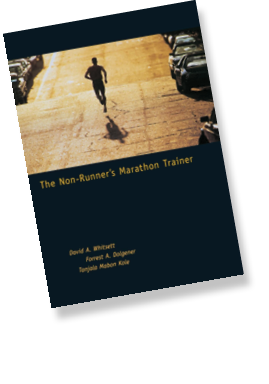 Readers continue to remark on its impact. One UNI alum commented on Facebook, “I followed the book for my first marathon. Loved the book’s approach, and it was so non-threatening!” Another noted, “His book is really great! I used it for my first marathon 20 years ago and loved the simplicity and motivating stories.”
Runners outside UNI have also shared praise. One Amazon reviewer wrote, “I just feel better when I run, plus it helps me to cope with things in general. The skills we’ve learned don’t apply just to marathoning — they apply to life.” Another Goodreads reviewer said, “The book works. Not only did I finish, but I had fun in the process as promised.”
A teacher who made students believe
Whitsett’s impact stretched far beyond running. As a founding force behind UNI’s industrial and organizational psychology program, he helped students link theory to real-world performance. He also devoted time to UNI athletics, especially wrestling, where he coached athletes to “create their own realities” in pursuit of peak achievement.
Former student Murray Barrick, ’80, reflected, “One of Dave’s super powers was the art of seeing you and making others feel seen and heard and understood. As a 19-year-old, that had an effect. It made you raise your own game. Made you become a better version of yourself.” Barrick continued, “Students had the answers locked up inside themselves, but they needed a guide. And Dave was an extraordinary guide.”
“You meet a lot of tough guys in wrestling, but not a whole lot of professors of psychology,” reflected former UNI wrestling coach Jim Miller, ’75, ’88. “How you think and what you say to yourself matters. Dave just wanted to see people reach their full potential.”
Karen Paul, ’84, said it simply: “His legacy lives on in all the careers he’s launched and the inspiration he instilled.”
When Whitsett died in 2024 at 82, those he taught and mentored remembered a professor who could make them believe in themselves. “He respected my ideas,” Whitsett once said of a mentor who inspired him to teach. “No one had done that before. I decided then I wanted to do that — for other kids.”
Enduring lessons
As UNI marks its 150th anniversary, the Marathon Class remains one of the university’s most powerful examples of experiential learning — where discovery happens not just through lectures but through sweat, reflection and shared accomplishment.
The class showed students what Whitsett always believed: that success begins in the mind. For those who ran with him, that lesson has lasted far longer than any race time.
They believe if they can do 26 miles, they can do anything. The finish line, it turns out, was only the beginning.”