
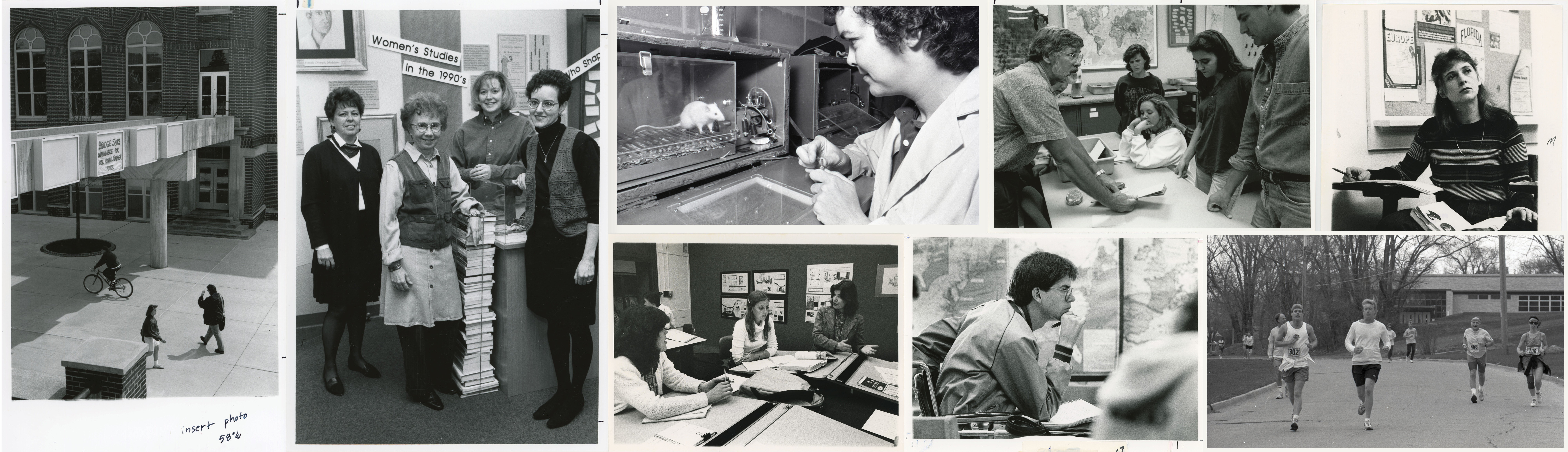
CSBS at 45
A chapter in UNI's 150-year story
As the University of Northern Iowa marks its 150th anniversary, the story of the College of Social and Behavioral Sciences is inseparable from the institution itself — shaped by a commitment to understanding people and society.
UNI’s origins date to 1876, when it was founded as the Iowa State Normal School to prepare teachers for a growing state. Through its evolution into the Iowa State Teachers College (1909–1961) and later the State College of Iowa (1961–1967), the study of human behavior, civic life and social systems remained central to the university’s mission, even before those fields were formally organized within a single college.
That structure came into focus in 1967, when the institution became the University of Northern Iowa, signaling a broader academic vision. One year later, in 1968, UNI reorganized into four colleges, laying the foundation for what would eventually become the College of Social and Behavioral Sciences.
YESTERDAY
From a broad mission to a distinct college
The newly formed College of Business and Behavioral Sciences brought together disciplines already deeply embedded in UNI’s identity: business and business education, home economics, psychology and the long-standing social science department, which dated to 1922. Psychology, which had previously been housed within education, moved into the new college, reflecting a growing recognition of the behavioral sciences as a field in its own right.
In 1969, the once all-encompassing Department of Social Science was differentiated into five departments: economics, geography, history, political science, and sociology and anthropology. This reorganization mirrored national trends in higher education while signaling UNI’s increasing emphasis on disciplinary depth, scholarly identity and research.
 Growth, realignment and a new identity
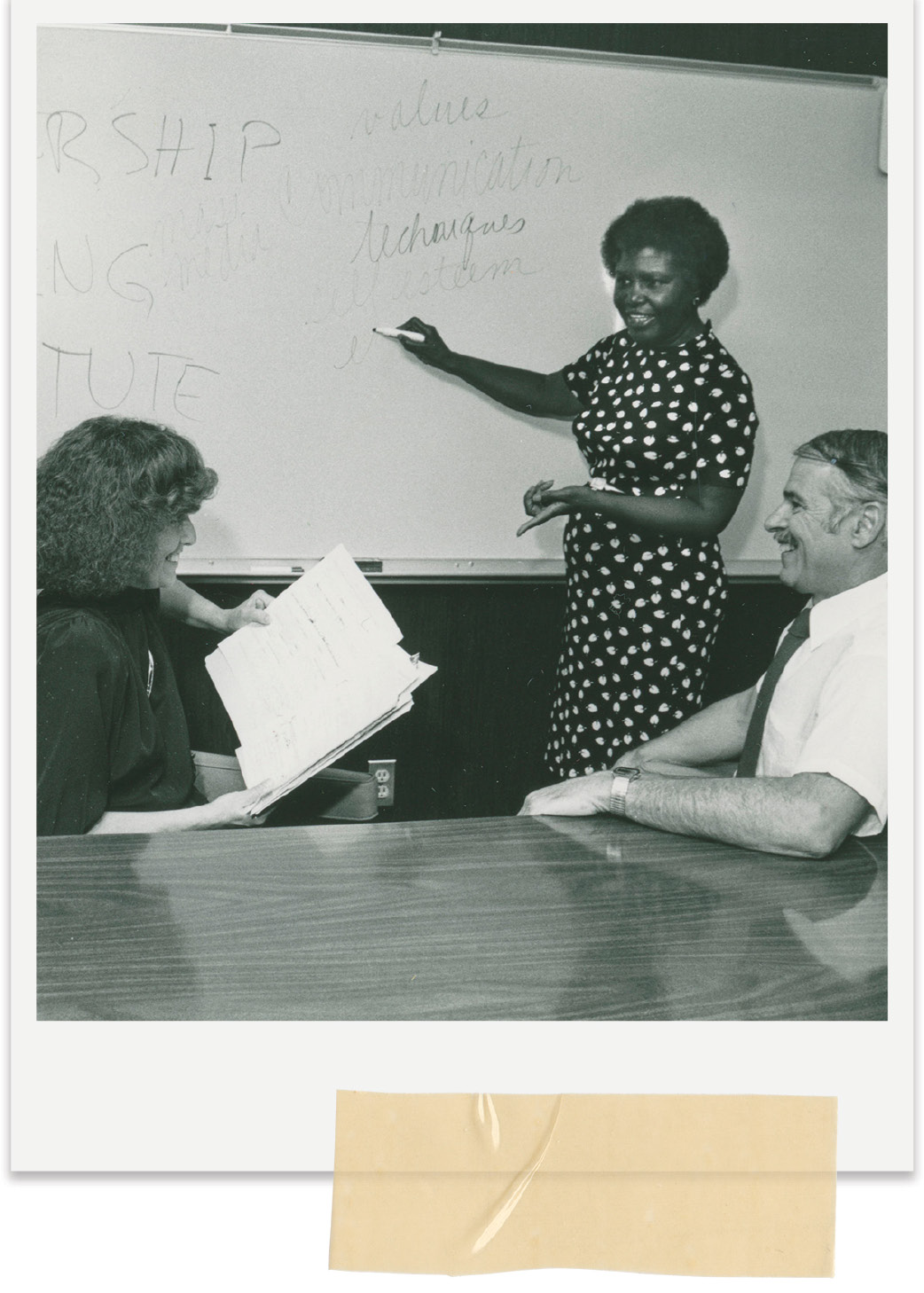
Throughout the 1970s and early 1980s, the college continued to evolve alongside the university. Programs expanded and adapted as social needs and academic disciplines changed. The Department of Sociology and Anthropology briefly incorporated social work in 1975, underscoring UNI’s long-standing commitment to applied learning and community engagement, before social work became its own department in 1982.
A pivotal moment came in 1980, when UNI’s business programs emerged as a separate entity with collegiate status. With that shift, the College of Business and Behavioral Sciences was renamed the College of Social and Behavioral Sciences, clarifying its academic focus and mission.
That shift ushered in another period of realignment. In 1985, the Department of Economics moved to the School of Business, the only instance of a department shifting out of CSBS. Even so, the college’s core purpose remained steady: advancing the scientific study of human behavior and social systems while preparing students for leadership in communities, organizations and public service.
Responding to a changing world
As UNI moved into the late 20th and early 21st centuries, CSBS adapted to new interdisciplinary approaches and emerging societal needs. In 1997, sociology and anthropology expanded to include criminology, reflecting a growing focus on justice, policy and social institutions. Home economics gradually evolved into the School of Applied Human Sciences by 2010, signaling a broader commitment to human development, aging and well-being.

College changes people. New friends and ideas shape old ways of thinking. You’re not exactly the same person who entered school by the time you leave. ‘Coursing Through Life’ is about this transformation. It slices through the rigid rectangularity of the old building like a force of Nature. Like the best original thinking, there is no pattern of conformation.”
TODAY
Today, the College of Social and Behavioral Sciences continues to be a place where curiosity meets action. Across its departments, schools and centers, CSBS blends rigorous study of human behavior, society and health with hands-on experiences that prepare students to make a real difference at home here in Iowa and around the world. Faculty continue to innovate in the classroom, incorporating active learning through research, internships, service experiences and emerging technologies like AI, ensuring students are prepared for a rapidly changing world.
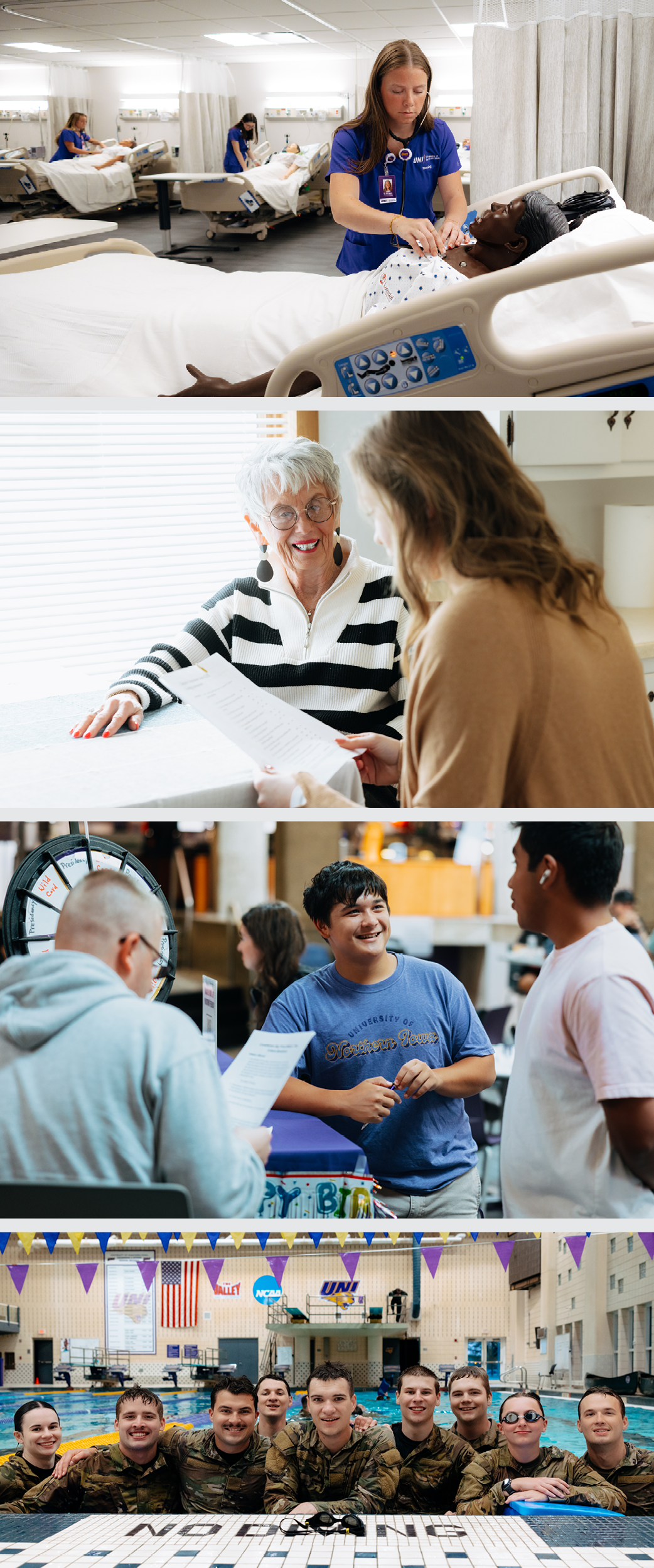 Health and human sciences remain at the forefront. The Department of Nursing and Public Health continues to expand, offering innovative pathways into high-demand careers. In fall 2025, the department announced a new Accelerated Bachelor of Science in Nursing program, creating a fast-track pathway into nursing for students who already hold a degree or have completed significant college coursework.
CSBS’s centers provide additional opportunities for applied learning and community impact across the college. In 2026, the Patricia A. Tomson Center for Violence Prevention celebrates 15 years of research, education and partnerships aimed at reducing violence. The ARCTICenter also marks its 10th anniversary, continuing to immerse students in research that drives real-world solutions.
The Department of Family, Aging and Counseling’s Dementia Simulation House continues to grow, giving students hands-on opportunities to better understand the challenges experienced by those living with dementia and their caregivers. Since it's opening in Feb. 2022, the team has offered dementia simulation experiences to over 4800 individuals and certified over 2900 Dementia Friends.
The Center for Civic Education, now in its second year and under the new direction of Allison Rank, is expanding opportunities for engagement on campus and across Iowa. In its first year, the center hosted civic salons and speaker events to help students explore their civic identities while also supporting professional development for K-12 educators and UNI faculty. In year two, the center expanded its priorities to include programming for teachers and school leaders, offered continuing education courses and hosted workshops focused on civic literacy, inquiry and teaching practices. By bridging campus, community and state needs, the center is positioning CSBS as a key resource for civic learning and engagement.
Global engagement continues to be a priority, with faculty-led study abroad programs spanning Europe, Asia and Latin America. These immersive experiences allow students to apply classroom learning in international contexts, deepen cultural understanding and develop the skills and perspectives needed to thrive in diverse communities.
CSBS also celebrates the 40-year history of UNI Army ROTC, which has trained student leaders since 1981. Following a national restructuring, the program will remain on campus as an extension unit of the University of Iowa through a partnership with the Iowa National Guard, allowing cadets to complete all training locally. UNI ROTC continues to provide scholarships, leadership training and career pathways while remaining a vibrant part of campus life.
Spring 2026 brought more structural changes that reflect both growth and a renewed commitment to the humanities and social sciences. Philosophy and world religions joined the Department of History, strengthening the study of ethics, culture and human thought.
The Department of Political Science welcomed criminology and criminal justice and the online philanthropy and nonprofit development (M.A.) to form the School of Public Affairs and Service, equipping students to address policy, governance and community challenges.
Sociology also joined geography to create a new School of Community and Geographic Innovation, blending sociological and geographic insight with hands-on community engagement.
Faculty are driving additional new initiatives, such as the UNI Humanities Hub, which embeds internships and career preparation into humanities curricula while strengthening the role of these fields on campus and in the wider community.
Together, these reorganizations and initiatives show that both humanities and social sciences remain integral, equipping students with critical thinking, ethical reasoning and the skills to shape their communities and build successful careers.
TOMORROW
The College of Social & Behavioral Sciences faces the future with purpose and pride. Higher education continues to shift — from enrollment pressures to changing workforce demands and evolving student expectations — and yet, the college remains committed to Iowa, its students and preparing graduates who make a real difference in their communities.
 “Teaching remains a dynamic endeavor, and in many ways, it is even more challenging today than it was in the past,” Dean Brenda Bass reflects. Faculty are meeting those challenges with creativity and care, incorporating new approaches to teaching, technology and active classroom experiences, all while maintaining the college’s core commitment to student success.
Health and human sciences will continue to anchor the college’s work. Nursing, public health and kinesiology programs are poised to grow, preparing professionals who deliver compassionate care, promote healthy communities and help individuals live stronger, healthier lives. Mental health programs will expand alongside them, responding to pressing needs across Iowa and beyond. Humanities programs will remain central as well, helping students develop critical thinking and ethical reasoning — skills that allow them to address complex problems with insight and empathy.
Experiential learning continues to define the CSBS experience. Dean Bass notes, “We have long focused on undergraduate research, internships, service learning and study abroad. Today, we are embedding these opportunities more deeply into every student’s curriculum, preparing them for the next steps in life and work.”
The Center for Civic Education will give students, faculty and K-12 educators the chance to engage across perspectives, build civic skills and connect with communities statewide.
Faculty-led study abroad programs allow students to bring global lessons home, applying what they learn internationally to local communities and civic challenges.
Through hands-on learning and interdisciplinary collaboration, the college prepares students not just to enter careers but to lead, serve and create meaningful change. Building on 45 years of innovation, CSBS approaches the future with confidence — ready to meet new challenges and empower the next generation. Every experience, in the classroom or beyond, gives students the chance to strengthen Iowa and the communities they touch.
Decades of learning, service and a willingness to adapt have shaped our college; kept us grounded and guided by purpose.
CSBS faculty remain focused on preparing students to flourish after graduation, and those values will continue to define the future students who walk our halls, and carry forward a long legacy of impact.


Celebrating the people who helped shape CSBS
This year, CSBS is celebrating the people who have shaped our college across generations — faculty, staff, alumni and friends whose leadership, service and vision continue to make a lasting impact.
Discover more stories at csbs.uni.edu/150, featuring a growing collection of profiles that highlight the strength of the CSBS community, past and present.
New honorees will be added throughout the summer and fall.