
Interior Design
A creative eye. Attention to detail. Thoughtful organization.
The design of a room can greatly affect every person who steps into a given space. As an interior design major at UNI, students will become thoughtful, creative and ethical problem solvers in the interior design profession. Equipped with state-of-the-art drafting and digital rendering software, the program prides itself on helping its students achieve through education, experience and thorough preparation for the licensing exam.
CIDA Accredited
Accreditation by the Council for Interior Design prepares students for entry-level practice, advanced study and to apply for membership in professional interior design organizations.
Hands-on ... Literally
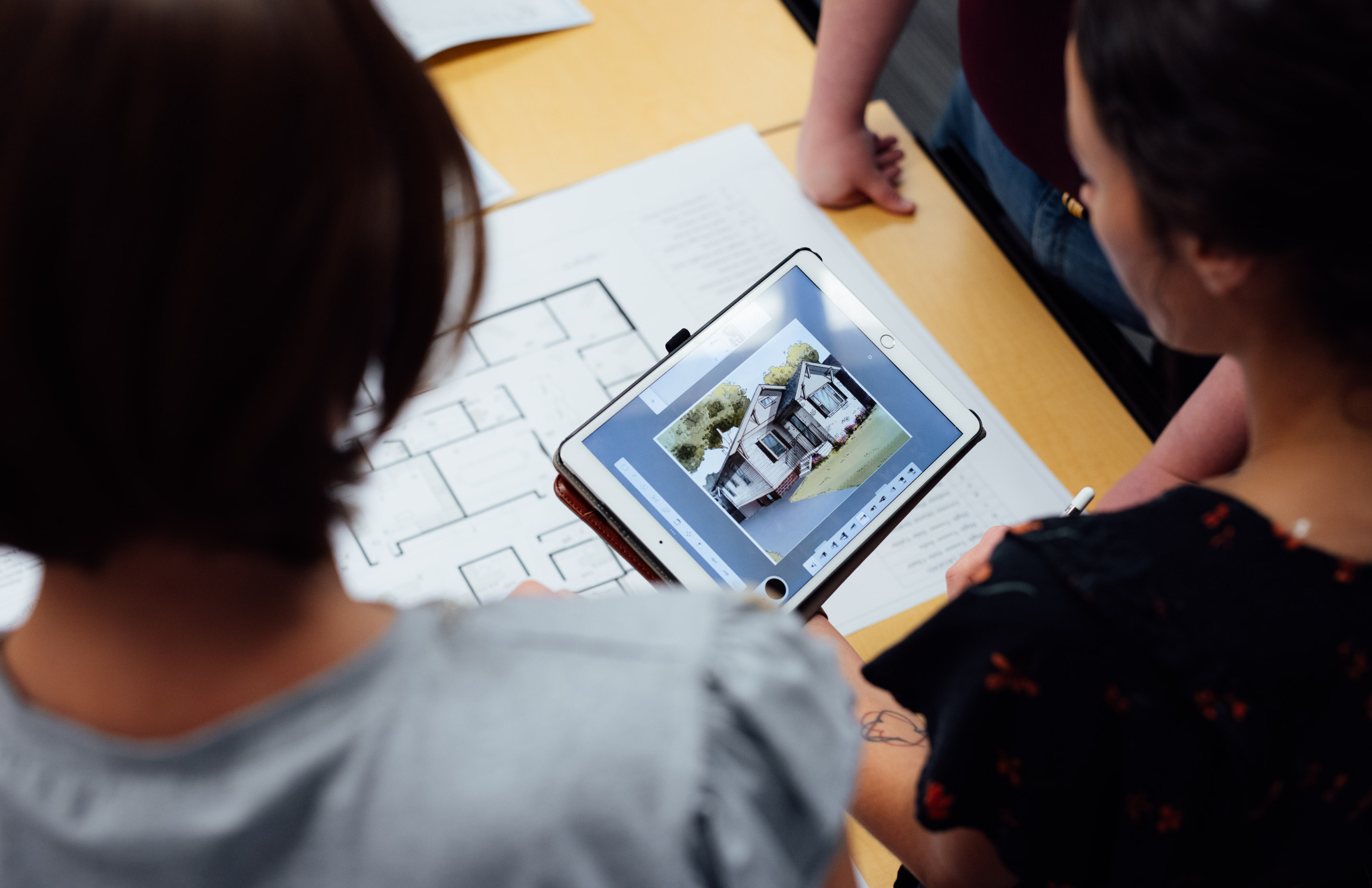
Studio classes allow students hands-on experience creating projects for diverse populations, special purposes and environmental concerns.
Focused on the Future
Coursework contains projects with emphasis on current design concerns such as environmental sustainability, green design, up-to-date code compliance measures, and adaptive re-use of existing buildings.

Want to learn more?
Fill out your information here and we'll be in touch!
Have a specific question? Contact us directly at:
Gowri Betrabet Gulwadi, Ph.D., LEED AP
Professor and Area Coordinator of Interior Design
Phone: 319-273-2814
Email: betrabet@uni.edu
Why Interior Design?
Find your path.
Active learning happens through interactions in studio critiques (peer, experienced faculty, outside evaluators), concept development and hands-on problem-solving. Small class sizes and extensive faculty contact hours enable frequent feedback in the learning process. Course content is reinforced in each parallel or successive course so that students are enabled a cohesive and comprehensive view of the interior design profession.

Shape your future.
UNI’s interior design majors enjoy a multitude of opportunities for future careers. The program has an active interconnection with professional communities and licensing bodies, including the National Kitchen and Bath Association, International Interior Design Association, National Council for Interior Design Qualification and Iowa Professional Licensing Bureau.
These organizations offer excellent mentorship, links with industry professionals, opportunities to engage with current conversations, trends and decisions in the industry, review of portfolios, scholarships, competitions and more!

Go beyond.
Outside of the classroom, UNI interior design brings students into the community to show them actual spaces with real-life constraints and opportunities. Engage with community members and design professionals who are actively engaged in design problem-solving. Additionally, students are able to:
- Travel with us each fall, on a three- to four-day design trip to a major metropolitan area. Meet up with design firms, tour design showrooms and experience cultural highlights aligned with design learning. Interested in joining the trip? Email Prof. Gowri Betrabet Gulwadi for more information.
- Study abroad as an interior design major is highly encouraged.
- A required internship helps ensure you have in-the-field experience prior to graduation.

Find your path.
Active learning happens through interactions in studio critiques (peer, experienced faculty, outside evaluators), concept development and hands-on problem-solving. Small class sizes and extensive faculty contact hours enable frequent feedback in the learning process. Course content is reinforced in each parallel or successive course so that students are enabled a cohesive and comprehensive view of the interior design profession.
Shape your future.
UNI’s interior design majors enjoy a multitude of opportunities for future careers. The program has an active interconnection with professional communities and licensing bodies, including the National Kitchen and Bath Association, International Interior Design Association, National Council for Interior Design Qualification and Iowa Professional Licensing Bureau.
These organizations offer excellent mentorship, links with industry professionals, opportunities to engage with current conversations, trends and decisions in the industry, review of portfolios, scholarships, competitions and more!
Go beyond.
Outside of the classroom, UNI interior design brings students into the community to show them actual spaces with real-life constraints and opportunities. Engage with community members and design professionals who are actively engaged in design problem-solving. Additionally, students are able to:
- Travel with us each fall, on a three- to four-day design trip to a major metropolitan area. Meet up with design firms, tour design showrooms and experience cultural highlights aligned with design learning. Interested in joining the trip? Email Prof. Gowri Betrabet Gulwadi for more information.
- Study abroad as an interior design major is highly encouraged.
- A required internship helps ensure you have in-the-field experience prior to graduation.

Not your average professor
"Welcome to a creative, meaningful, and fulfilling profession. Through interior design, you will gain a new lens through which you will see yours and others’ worlds, become knowledgeable in the key ingredients to create safe, healthy and enjoyable spaces."
– Dr. Gowri Betrabet Gulwadi, professor of Interior Design

Panther POV
“The professors that I have had in the Interior Design program are incredible instructors as well as people. Having the guidance of design professionals inside of your classroom is an incredible advantage because they possess the knowledge and experience that we will all find throughout our careers after UNI.”
– Jonny Martin, Senior

Panther POV
"My major helped me become a successful business owner and designer because it prepared me to start my business the day I graduated. I felt confident with my business knowledge and was able to implement everything I had learned over four years right away! I could market myself and my skills properly and still am today!”
– Katie Lewis, '16, Business Owner of 319 Decor and Design
Explore ...
You have a passion and a bold vision for your future. We have the tools to bring that dream to life. Find your answers here.
The interior design program leading to the Bachelor of Arts in Interior Design is accredited by the Council for Interior Design Accreditation, www.accredit-id.org, 206 Grandville Avenue, Suite 350, Grand Rapids, MI, 49503.
The CIDA-accredited program prepares students for entry-level interior design practice, for advanced study, and to apply for membership in professional interior design organizations. The B.A. in Interior Design granted by the University of Northern Iowa meets the educational requirement for eligibility to sit for the National Council for Interior Design Qualification Examination (NCIDQ Exam). For more information about NCIDQ Exam eligibility visit: Eligibility - CIDQ
Student Achievement Data
B.A. in Interior Design, first offered in 1970
Retention Rate: Students have to go through a Portfolio Review process after one year of design studies in order to be accepted into the program. The Portfolio Review process includes grade and GPA requirements and an in-person interview at which students present their work. All students receive information about the Portfolio Review process and how to apply and prepare for it during their first year classes.
This retention rate is an average of the past three years, and is based on the number of accepted students who successfully passed the Portfolio Review and returned the following year.
92% of those accepted in the Spring of a previous year returned in the Spring of the following year.
Graduation Rate: These rates are based on the number of accepted students who returned the following year, and graduated within four years. This percentage is for the cohort accepted in 2023 who graduated in 2026.
Of the students from the 2023 cohort who returned the following year 96% completed their coursework and graduated within four years.
Job Placement: Students complete an Internship for credit after they have finished all their classes. These placement rates are calculated based on students who secured full-time positions within one year of completing their Internship.
87% of students secured full time design positions within one year of completing their internship in 2025.
Acceptance into Graduate Program: None of the students who graduated in 2025 applied to graduate school.